
Read Saginaw County Deed Records
The Register of Deeds indexes Saginaw County deed records at 111 South Michigan Avenue. A deed records a claimed transfer. It ties that transfer to a legal description of the land. Mortgages, assignments, discharges, liens, easements, restrictions, land contracts, court orders, survivor instruments, and subdivision plats sit in the same family of land records. Use the index to locate a filing. The document image then supplies the operative names, dates, clauses, and land description.
| Deed Type | What It Does | Common Use |
|---|---|---|
| Warranty deed | Conveys the grantor's stated interest with covenants in the instrument | Arm's-length transfers |
| Quitclaim deed | Conveys whatever interest the grantor has without adding title guarantees | Family transfers and title cleanup |
| Survivorship deed or affidavit | Documents a transfer tied to death or survivorship | Estate and survivor title work |
| Personal-representative deed | Conveys land through an authorized estate representative | Probate administration |
| Sheriff's or foreclosure deed | Records a conveyance arising from a foreclosure process | Distressed-property chain research |
A mortgage or lien works differently than a deed. It records a claim against the land. No ownership interest changes hands. A recorded discharge shows that a release was filed, yet its absence does not prove a debt is still unpaid. Read each instrument on its own terms rather than drawing a legal conclusion from the index label.
Filter Saginaw Deeds in Tapestry
Tapestry is the online entry point for the Saginaw County Register of Deeds index. Official tutorials cover both party-based and land-based filters. Start broad, then narrow by a date or parcel clue. The percent sign serves as a wildcard in name searches. That helps when initials, spacing, or business suffixes vary.
| Search field | Best use | Important limit |
|---|---|---|
| Last and first name | Grantor or grantee search | Try spelling variants and wildcard forms |
| Document number or type | Retrieve a known filing or narrow a family | Saginaw's full type list was not captured |
| Recorded-date range | Focus on an expected transfer period | Recording date can differ from execution date |
| Parcel number | Connect a known PIN to indexed filings | Older deeds may lack the current PIN |
| Subdivision, lot and block | Search platted property | Use the exact plat caption when known |
| Section, town and range | Search unsubdivided land | Compare the full legal description |
Expect some repeats in the results. Several parties can be indexed on a single document. The official tutorial lists recorded date, document date, document number, document type, last name, first name, and party type as result columns, so open the detail row before purchasing an image.
Trace Saginaw's Grantor-Grantee Chain
Saginaw County's deed index organizes each transfer around two roles. The grantor gives an interest; the grantee receives it. Begin with the newest confirmed conveyance and work backward. Keep the legal description consistent at every step. A matching name alone proves little. A parcel split, a combination, a trust transfer, or a business-name change can break the chain.
- Use the current roll or known owner to find the latest deed with that party as grantee.
- Open the instrument and record its grantor, document number, recording date, and complete legal description.
- Search that grantor as an earlier grantee. Match the lot, block, subdivision, or section description before accepting the link.
- Repeat the process. When the online evidence ends, carry the liber and page references into deed books, microfilm, plats, or archival sources.
- Grantor
- The party transferring the stated interest.
- Grantee
- The party receiving the stated interest.
- Chain of title
- The linked sequence of conveyances affecting the same land.
- Liber and page
- An older book-and-page reference used to retrieve a recorded document.
- Instrument number
- A unique modern filing reference used by the index and office.
Saginaw's 1835 Index Needs Context
County historical material says the Register of Deeds can retrieve indexed documents recorded since 1835. That is not a promise every image sits online. Treat index depth, online search depth, and image availability as three separate facts. The county publishes no single cutoff date. Older deed chains simply need different tools.
For an older chain, take liber and page references straight to the Register of Deeds, and remember that original subdivision plats stay with that office. The Public Libraries of Saginaw local-history collection adds city directories from 1866, newspapers from 1853, histories, atlases, and plat books. Those sources explain old names and places. They never replace a recorded conveyance.
Note: Historic directories support property history; the deed book remains the source for a recorded transfer.
Saginaw Legal Descriptions Carry the Match
The county recording checklist sets firm rules for descriptions. Platted land cites the plat caption, lot, and block. Unsubdivided land uses quarter, section, town, and range clues. Assignments and discharges should cite the original liber and page or document number. Those details matter most when a street address changed or a current parcel number came from a split.
Names must stay consistent. Acknowledgments need the required notary or official details, and a non-English instrument requires a written English translation. Survivor filings may require a certified death certificate. The checklist also directs removal of the first five Social Security number digits from covered instruments executed after September 12, 2017.
State the transfer-tax consideration as the checklist directs. Include any Real Estate Transfer Valuation Affidavit and claimed exemption. The listed rate is $8.60 per $1,000 under the cited Michigan statutes, though consideration never proves fair market value. Check the county's current checklist and fee page before preparing a filing.
Reach Saginaw Deeds Six Ways
The Register of Deeds search-request page documents six request channels. Requests may go through Tapestry, email, telephone, fax, or an in-person visit. A free public workstation also operates in the office. These channels help when an old reference will not resolve online. They also help if an image is unavailable, or a search needs staff support.
Hours run weekdays, 8:00 a.m. to 4:45 p.m. The address is 111 South Michigan Avenue, Saginaw, Michigan 48602. Call (989) 790-5270, fax (989) 790-5278, or email rod@saginawcounty.com. Give staff an owner name, address, and approximate purchase date. That helps them narrow the work.
The official Register of Deeds page names the office as keeper of the county's deed records.
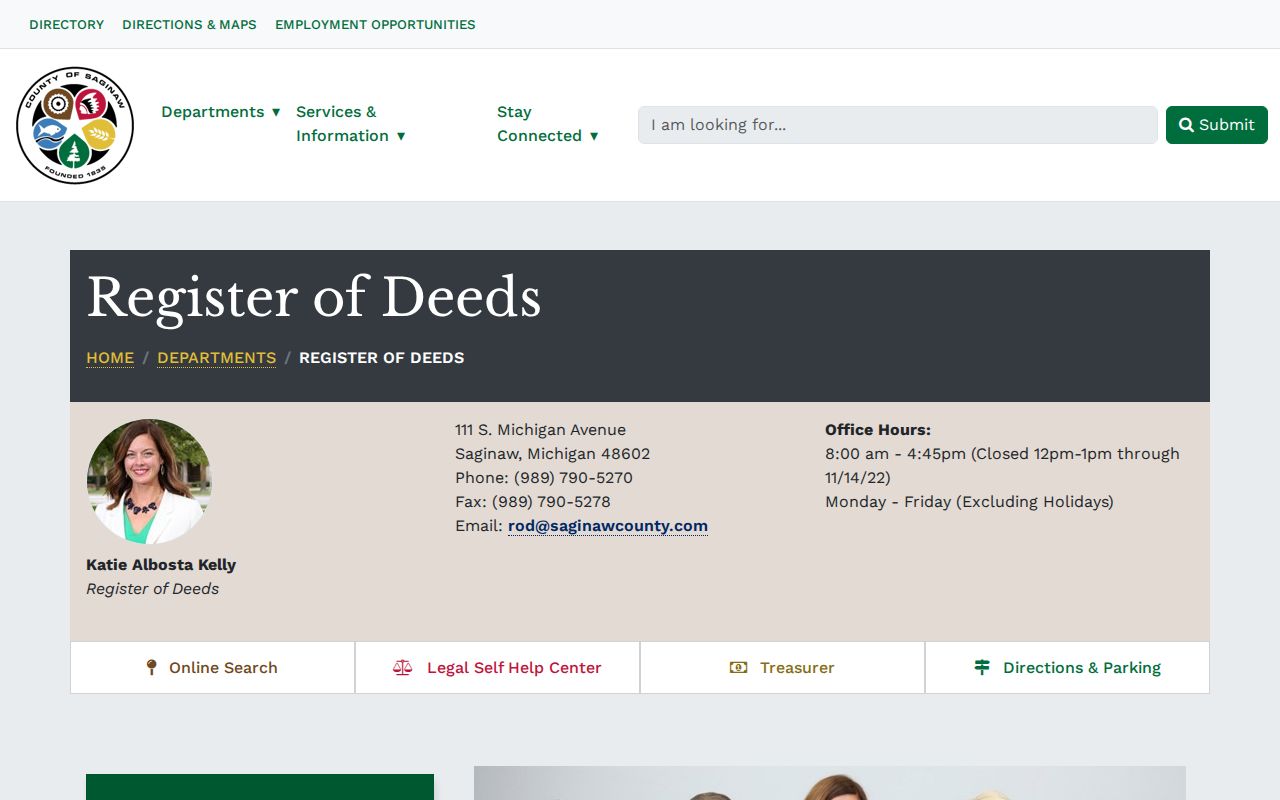
The deed index and original plats remain with this office.
Verify Each Saginaw Index Result
Treat any Tapestry hit as a lead, not a finished answer. One filing can generate several rows. The recorder indexes each party on its own line. Before calling two rows separate transfers, line up the document numbers and recording dates. Then read the finer details. Party type matters here. Whether a name shows up as grantor, grantee, or trustee changes what the Saginaw County deed records entry actually tells you. Check that role before drawing conclusions. The Saginaw County Tapestry portal is where these index results appear.
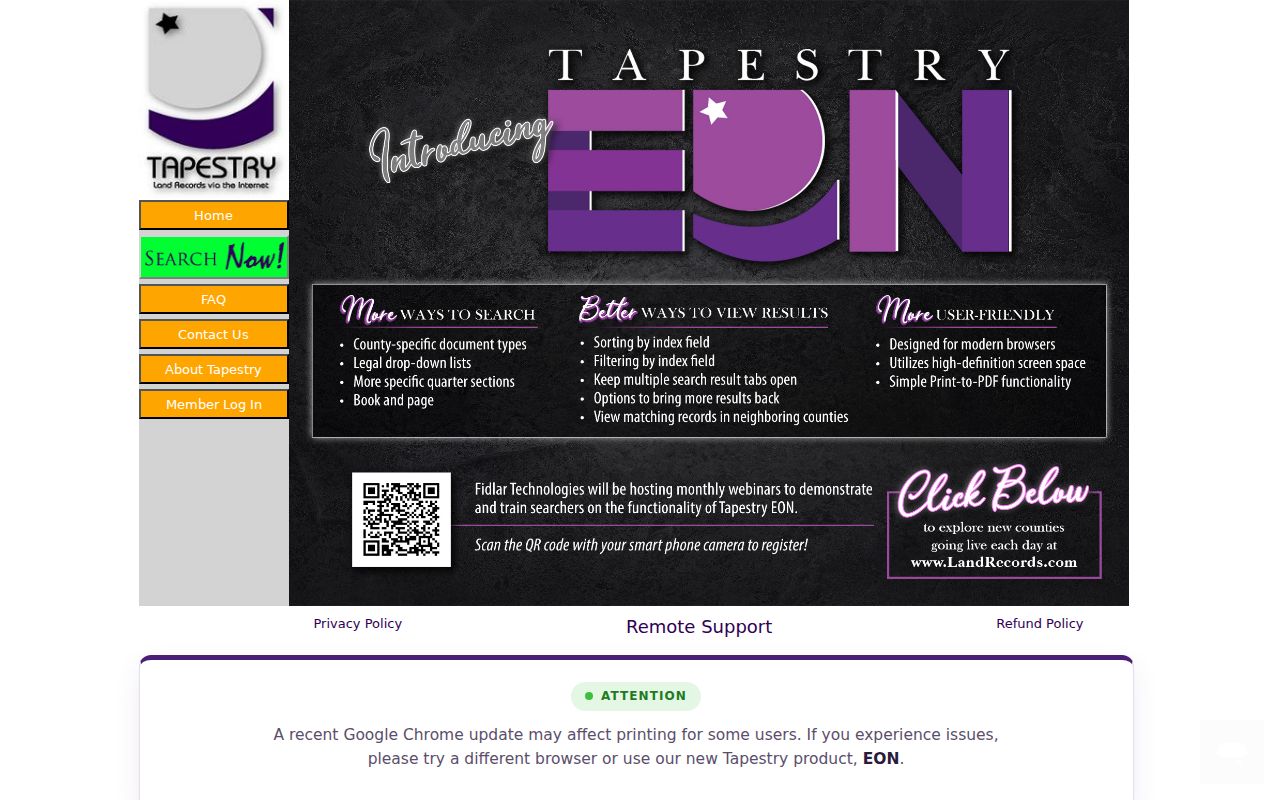
The entry point serves both account holders and one-time visitors. Image access and payment terms vary with the route a searcher chooses.
Separate Saginaw Deeds From Liens
Not everything in the land-record index transferred ownership. The same system tracks mortgages, assignments, releases, and construction liens. It also logs tax liens, judgments, lis pendens, easements, covenants, and restrictions. Build the chain of title from true conveyances only. Then set encumbrances alongside the period when each was recorded against the parcel.
An assignment or discharge should cite the earlier liber/page or document number. That cross-reference is what pairs related filings together. A missing release is a research gap, not proof a debt still stands. Priority, enforceability, and bankruptcy questions reach past the public deed records. They often call for legal review.
Saginaw Added a Fraud-Alert Lead
County Board minutes from May 2023 record the Register of Deeds introducing a Property Fraud Alert service. The service serves Saginaw County. The Saginaw registration page accepts signups. Read the live terms before enrolling. Signup fields, pricing, and alert scope sit with the vendor rather than the county. An alert never blocks a filing.
Think of fraud alerts as notice tools. They do not validate a deed. They cannot cure a false filing or insure title. They also cannot replace a careful reading of Saginaw County deed records. If an alert flags an unfamiliar instrument, pull the recorded image. Call the Register of Deeds about it. The vendor's Saginaw County sign-up page posts the current enrollment details.
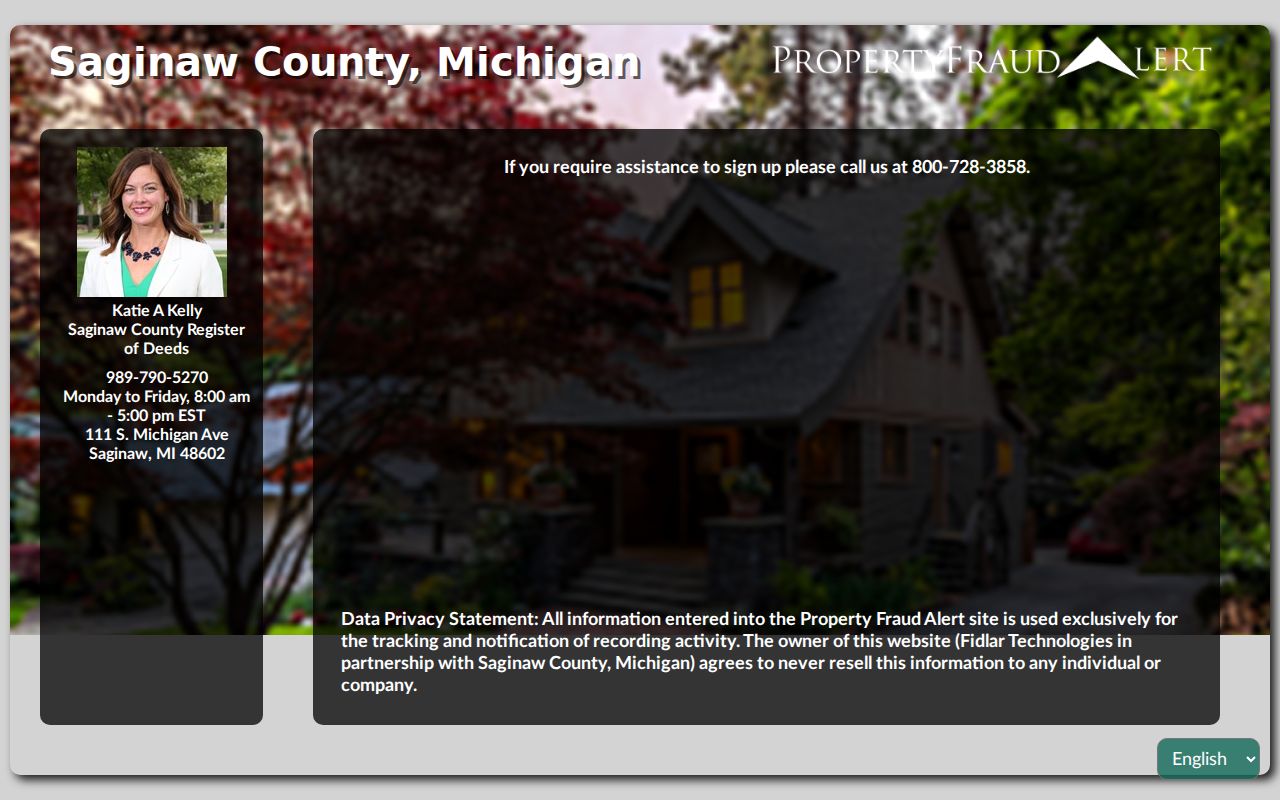
The capture confirms the endpoint, while its current enrollment terms still need live verification.
Order a Saginaw County Deed
The Register of Deeds takes search requests through Tapestry, email, phone, fax, and the courthouse counter. Have the owner's name handy. Add the property address and an approximate purchase date. Recorded documents can also be read at the free public workstation inside the office. Mail and a courthouse drop box handle recording work. Tapestry document images may carry a charge.
Published county fees list copies at $1 per page and certification at $5 per document. An over-counter search by staff runs $5. Recording a document costs $30, plus $3 for each additional instrument under one assignment or discharge. Cash, check, money order, and major cards are accepted, with card fees added. Confirm the live schedule before paying anything. The county's fee page carries the full recording and copy schedule.
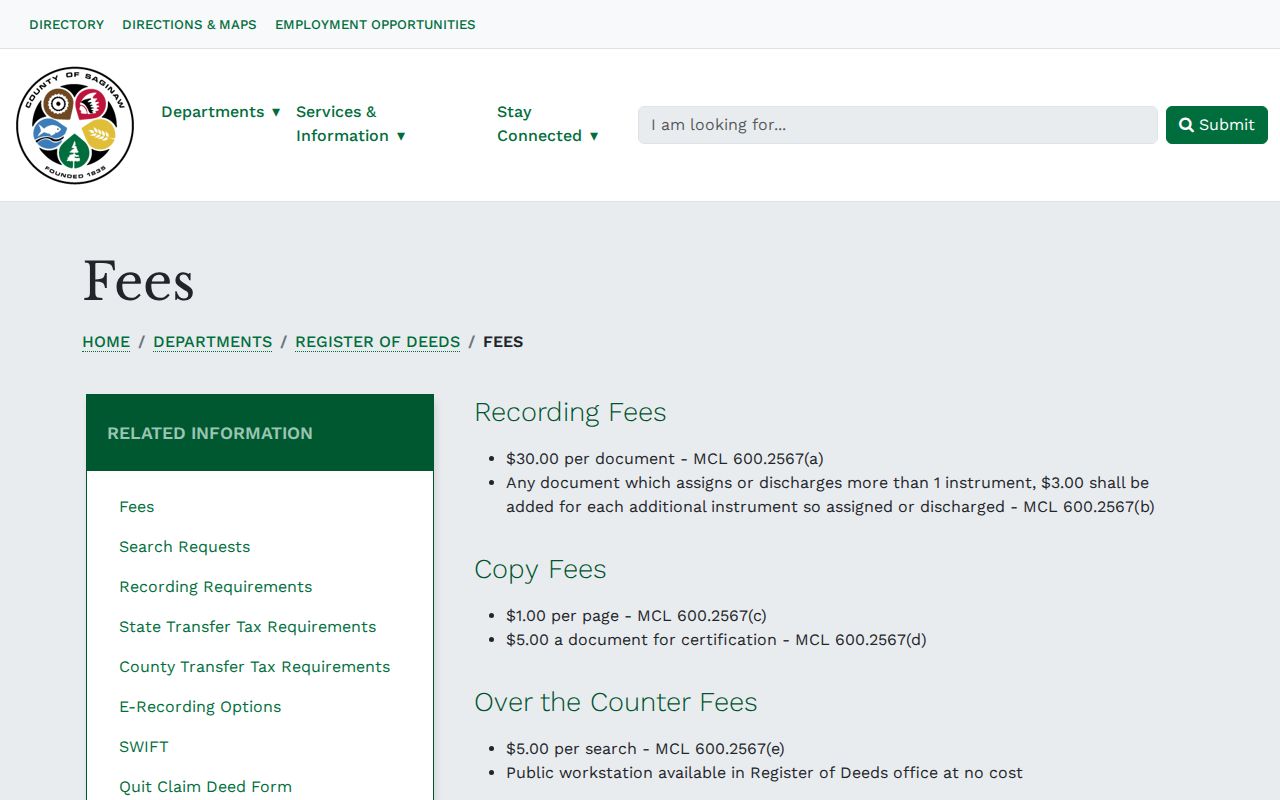
The fee page splits recording, plain-copy, certification, and staff-search charges into separate lines. Don't fold them into one assumed price when budgeting a deed order.
Recorded, not guaranteed. Saginaw County deed records show indexed filings, not a title opinion. Unrecorded interests and priority issues may require professional title work.